
By definition, vegans do not eat animals and do not use animal products. However, one product that many modern-day-vegans would happily digest and use guilt-free is honey. So there, definition broken. Animal products eaten and consumed while veganism remains valid.
So, if veganism can bend one of its rules can it bend its other?
In the main, there are only two reasons for any person to turn to veganism: One, the rearing of animals for food destroys the planet. And two, the rearing of animals for food causes animal suffering. Ethically and morally these surely are the only two reasons for vegans to choose the diet that they have. Any other reason starts to transform the whole argument into a self-righteous purity contest, and one that will start to resemble mere fashion – and thus be dismissed as such. Exclusive. Out of date. Soo last season.
Thus, taking these two sole pillars of veganism, vegan doctrine becomes pretty black and white: animals are “friends not food.” (As Bruce the Selachimorpha was all too keen to tell Nemo cica 2003)
However, what if we could find one animal that defied expectations? One that instead of suffering immeasurably in factory-farm style environments, thrived. One that so rapidly produces that its endangerment could not be further from reality. One that’s mass-production helped clean the planet instead of destroying. And one that arguably most importantly was immune to the pain and agony of the slaughterhouse. What then? Where would vegans stand? Well, surely, if we are all in agreement with the above, we would then find ourselves in the position with an exception to the adage that animals are ‘friends not food.’
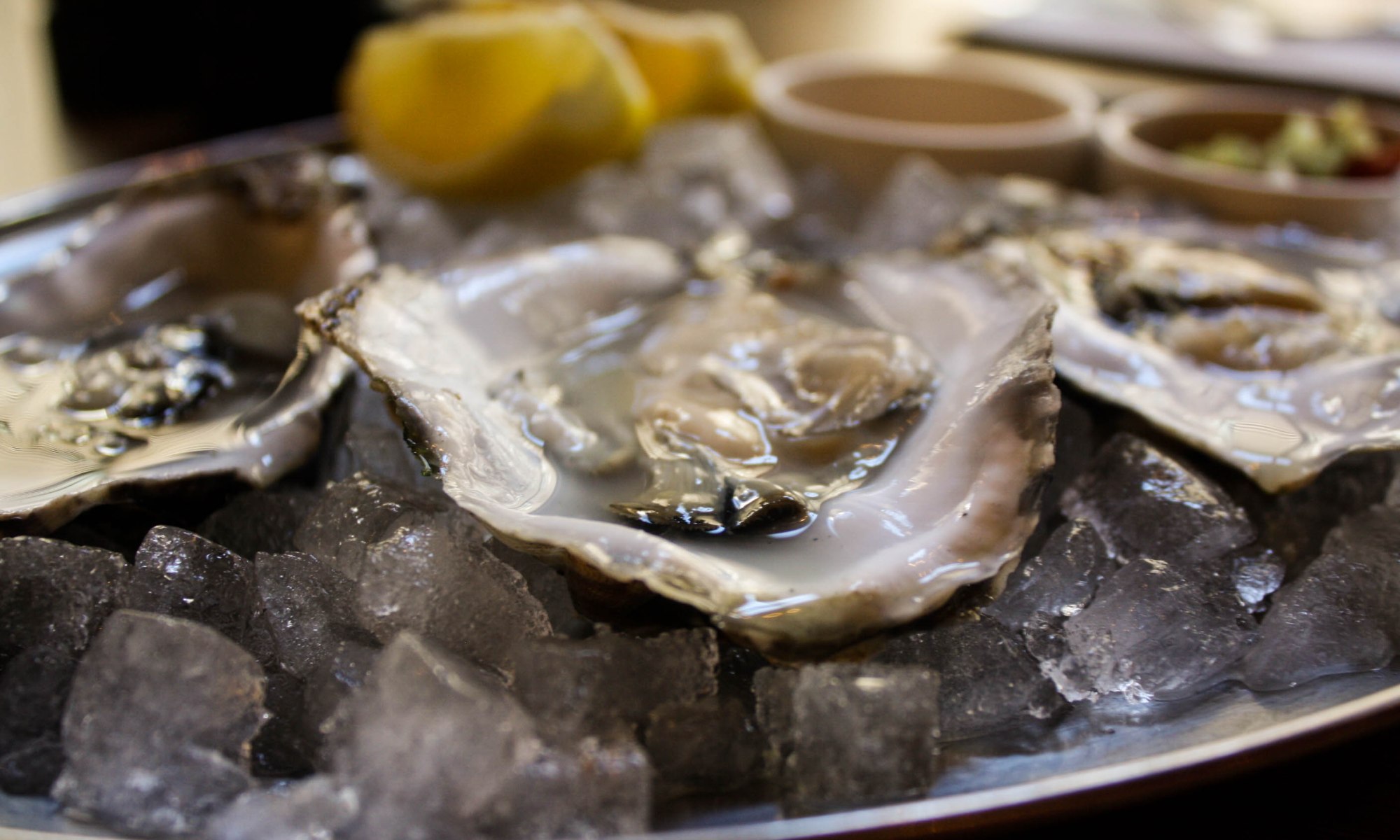
Cue the oyster.
Heading back to the dictionary, animals can only make the cut if they are a living organism which feeds on organic matter, typically having specialized sense organs and nervous system and able to respond rapidly to stimuli. Oysters blur the lines between plant and animal most vehemently. Firstly, they are senseless creatures – I mean this in the sense that they cannot move and so cannot respond rapidly to any kind of pain stimuli. As a result, evolutionary speaking, for oysters the need to develop a central nervous system (CNS) never arose. As such, biologically, due to this complete and utter lack of a central nervous system, oysters are nearly completely indistinguishable from plants. The only exception is that their feeding habits where they are indeed partial to a feast of organic matter from time to time. It is also this CNS absence which, importantly, means that they cannot feel pain. And if they can’t feel pain, then they must be “immune to the pain and agony of the slaughterhouse.”
With this being said, if we head back to the two pillars underpinning the actions of every ethically valid vegan– being that the rearing of animals for food destroys the planet and causes animal suffering – we are left in a bit of an awkward position. For the eating of oysters does neither. So then, to silo oysters in a dietary taboo simply because they have been stamped as ‘animals’ seems to be a very superficial distinction indeed. One that could be aligned with the thought that we should be eating more plants only because they are from the plant kingdom. Completely ignoring the rationale that plants represent a sound source of food and one that causes minimal destruction to the planet. Or instead deciding that all food that begins with a ‘B’ must be banned. Which, would be a huge shame, unless like Michelle Obama you really don’t like the taste of beetroot!
And so, to avoid veganism becoming an artificial purity parade, oysters should indeed be back on the menu. No vegan should be asking themselves, ‘what is it that I must do to remain vegan? Oh yes, avoid oysters!’ No, they should be questioning their dietary choices through the lenses of what is the right choice in this situation? And in this situation, vegans should be permitted to eat oysters.
 A little Tasty
Honey is definitely not vegan and you’re not vegan if you still eat it
LikeLike
Hi Amanda! Thanks for commenting! I was only intending on raising the argument of ‘raw honey’- where no pesticides or processes are utilised in the production – and how in that instance it can indeed be considered vegan. I’d love to hear why you think not? 🙂
LikeLike
Bees make honey for themselves to eat, and they work VERY hard to make the littlest bit of it.
It is a vomit that they secrete and swallow 20 times until its turned into honey, which they then feed themselves and their families with.
Honey does not belong to us (not to mention it is not human food since it is an animal product).
Also, oysters are animal product as well, given that they are FULL of cholesterol (and no doubt naturally occuring animal hormones, saturated animal fat, pus, blood cells, etc)
Plus they’re fishy and gross and should just be left in the ocean; We have so many far better options for food, there’s no good reason for anyone to be eating that.
LikeLike